
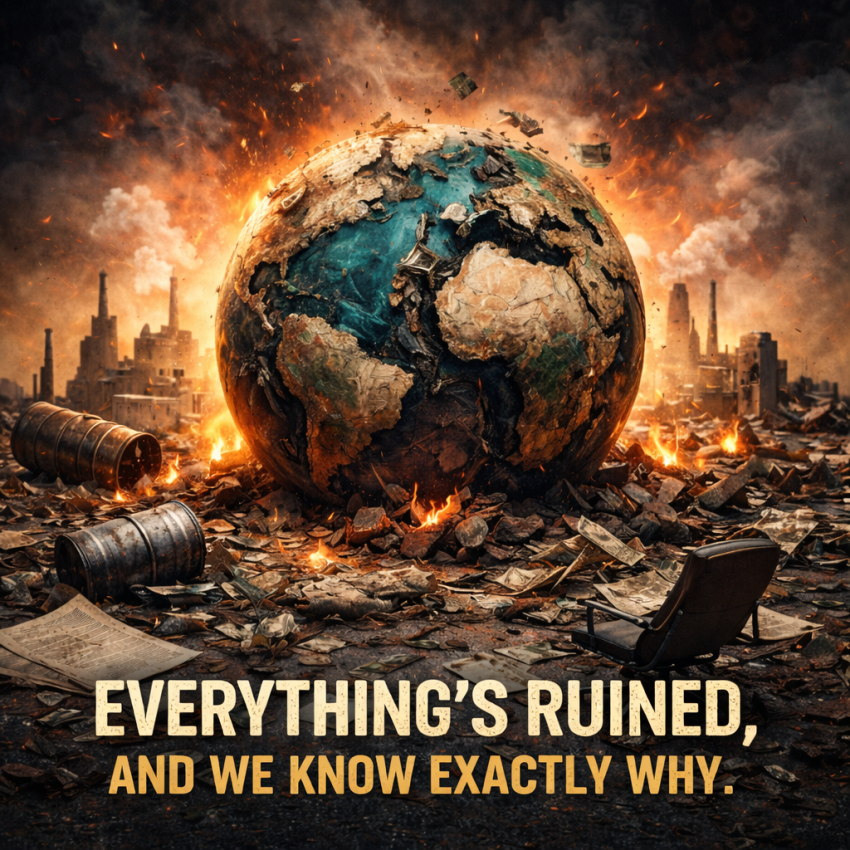
As a Gen X kid, I learned early that cynicism was not a flaw, it was a survival skill. Somewhere between watching malls hollow out and seeing every “sure thing” turn shaky, I found bands that sounded like they actually understood that feeling. Faith No More was one of them, and “Everything’s Ruined” still feels like a mission statement for adulthood in late capitalism.
On the surface, the song sounds like a tantrum. The title alone reads like a shrug followed by a sigh. But that is the trick. Faith No More always loved disguising sharp critique as absurd theater. “Everything’s ruined” is not really about one broken thing. It is about a pattern. Someone shows up, takes over, extracts value, and leaves a mess behind. Then they stand there, acting shocked that the place is on fire.
When Mike Patton repeats the line “everything’s ruined,” it feels intentionally over the top. It mirrors how people talk when they refuse to own their role in the damage. Nothing is ever their fault. The system failed them. The crowd did not appreciate them. The rules were unfair. Meanwhile, they were the ones knocking down walls and calling it progress. That theme hits harder the older you get, because you have watched it play out in offices, politics, tech, and even friendships.
What I love most is how the song refuses to moralize in a clean, tidy way. There is no lecture. Instead, it throws the mess back in your face and dares you to laugh. That line “everything’s ruined” becomes both accusation and punchline. It captures the Gen X instinct to cope with disappointment through sarcasm rather than speeches. If you cannot fix it, at least you can name it.
Seeing Faith No More play live in Memphis only locked that feeling in deeper for me. They were tight, strange, and completely uninterested in pandering. When this song hit, it felt less like a performance and more like a shared recognition between band and crowd. We all knew the type of person the song was pointing at. We had worked for them, dated them, or watched them fail upward.
Decades later, the theme has aged uncomfortably well. “Everything’s Ruined” feels like a commentary on modern burnout culture, on leaders who confuse disruption with destruction, and on the exhausting habit of declaring collapse while actively causing it. The song does not ask you to fix the world. It just asks you to notice who keeps breaking it and pretending they did nothing wrong.
That honesty is why the song still matters to me. It is not nostalgic comfort. It is a reminder that calling out the nonsense, even with a smirk, is its own quiet form of resistance.